Buy najlepszeppk.eu ?
We are moving the project
najlepszeppk.eu .
Are you interested in purchasing the domain
najlepszeppk.eu ?
domain@kv-gmbh.de · 0541-91531010
Buy najlepszeppk.eu ?
What is tartaric acid?
Tartaric acid is a naturally occurring organic acid found in many fruits, particularly in grapes. It is commonly used in the food and beverage industry as a flavoring agent, preservative, and acidity regulator. Tartaric acid is also used in the production of wine to control the acidity and pH levels, as well as to prevent crystallization of potassium bitartrate. Additionally, it is used in the pharmaceutical and cosmetic industries for various purposes. **
Is tartaric acid halal?
Yes, tartaric acid is considered halal. It is a naturally occurring organic acid found in many fruits, including grapes. It is commonly used in food and beverages as an acidulant and flavoring agent. As long as it is derived from permissible sources and does not contain any haram (forbidden) ingredients, tartaric acid is considered halal for consumption. **


Similar search terms for Tartaric
Top-Angebote
Products related to Tartaric:
-
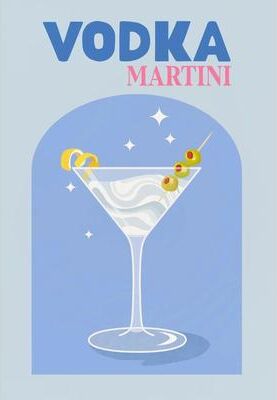
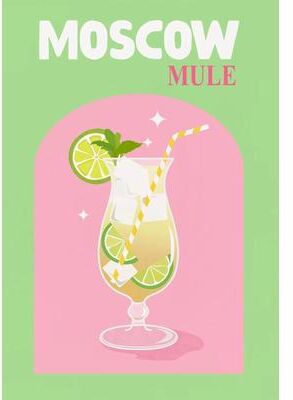
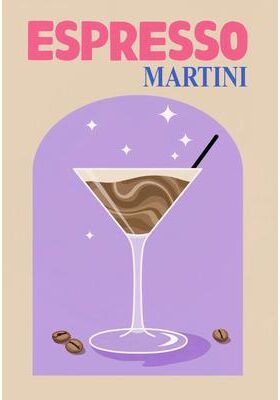
Inspired Living Colorful Cocktail Wall Art Set Trendy Bar Decor Prints For Stylish Home Bars 3 50x70cmElevate your space with vibrant, eyecatching cocktail wall art designed to bring personality and energy into your home. These stylish prints are perfect for anyone who loves entertaining, relaxing with a drink, or simply curating a modern aesthetic....23,97 $*Shipping: 0,00 $Secure redirect to the provider
-
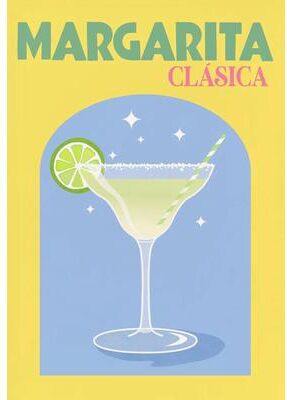
Inspired Living Colorful Cocktail Wall Art Set Trendy Bar Decor Prints For Stylish Home Bars 4 50x70cmElevate your space with vibrant, eyecatching cocktail wall art designed to bring personality and energy into your home. These stylish prints are perfect for anyone who loves entertaining, relaxing with a drink, or simply curating a modern aesthetic....23,97 $*Shipping: 0,00 $Secure redirect to the provider
-
Inspired Living Colorful Cocktail Wall Art Set Trendy Bar Decor Prints For Stylish Home Bars 2 40x50cmElevate your space with vibrant, eyecatching cocktail wall art designed to bring personality and energy into your home. These stylish prints are perfect for anyone who loves entertaining, relaxing with a drink, or simply curating a modern aesthetic....23,97 $*Shipping: 0,00 $Secure redirect to the provider
-
Inspired Living Colorful Cocktail Wall Art Set Trendy Bar Decor Prints For Stylish Home Bars 9 50x70cmElevate your space with vibrant, eyecatching cocktail wall art designed to bring personality and energy into your home. These stylish prints are perfect for anyone who loves entertaining, relaxing with a drink, or simply curating a modern aesthetic....23,97 $*Shipping: 0,00 $Secure redirect to the provider

-
What is the difference between L-tartaric acid and D-tartaric acid?
L-tartaric acid and D-tartaric acid are mirror-image isomers of each other, known as enantiomers. The main difference between them is their spatial arrangement of atoms. L-tartaric acid has a left-handed configuration, while D-tartaric acid has a right-handed configuration. This difference in configuration gives them different properties, such as their ability to rotate plane-polarized light in opposite directions. Despite their differences, they have similar chemical and physical properties. **
-
Why is meso-tartaric acid optically inactive?
Meso-tartaric acid is optically inactive because it has a plane of symmetry that divides the molecule into two identical halves. This means that the two chiral centers in meso-ttartaric acid are arranged in such a way that the molecule is superimposable on its mirror image. As a result, the molecule does not rotate the plane of polarized light and is therefore optically inactive. **
-
How does the protolysis of tartaric acid (C4H6O6) occur?
The protolysis of tartaric acid occurs when it reacts with water to donate a proton (H+) to the water molecule, forming the conjugate base of tartaric acid and a hydronium ion (H3O+). This reaction can be represented as C4H6O6 + H2O → C4H5O6- + H3O+. The resulting conjugate base of tartaric acid is called tartrate ion (C4H5O6-), which is a weak base. **
-
What is the reaction equation for the formation of tartaric acid?
The reaction equation for the formation of tartaric acid is as follows: C4H6O6 + 2 KOH → K2C4H4O6 + 2 H2O This reaction involves the reaction of potassium hydrogen tartrate (C4H6O6) with potassium hydroxide (KOH) to form potassium tartrate (K2C4H4O6) and water (H2O). This reaction is a neutralization reaction, where an acid and a base react to form a salt and water. **

Why is the IUPAC name for tartaric acid and citric acid?
The IUPAC names for tartaric acid and citric acid are 2,3-dihydroxybutanedioic acid and 2-hydroxypropane-1,2,3-tricarboxylic acid, respectively. These names are used to provide a systematic and unique way to identify these organic compounds based on their chemical structure. The IUPAC names for these acids help to accurately describe the arrangement of atoms in their molecules, making it easier for scientists to communicate and work with these compounds in a precise manner. **
Why is the IUPAC nomenclature for tartaric acid and citric acid?
The IUPAC nomenclature for tartaric acid and citric acid is used to provide a systematic and standardized way to name these organic compounds based on their chemical structure. This helps to avoid confusion and ensure clear communication among scientists and researchers when referring to these specific acids. Additionally, the IUPAC nomenclature follows specific rules and conventions that help to accurately describe the molecular composition of these acids. **
Top-Angebote
Products related to Tartaric:
-
Headline Storecupboard One Pound Meals by Miguel Barclay – 85 Easy & Affordable RecipesMiguel Barclay is back with his sixth book in the 'One Pound Meals' series and he's on a mission to save you even more money and time with this collection of storecupboard recipes.Miguel has already revolutionised the way that many of you cook at home - with his budget recipes, healthy ingredients and his ingenious time-saving tips. In STORECUPBOARD ONE POUND MEALS Miguel takes his stress-free, maximum flavour philosophy and teaches you how to get the most out of your every day cupboard essentials. Tins, cans, dried herbs and spices become the main 'hero ingredients', helping you plan affordable dinners each week.With over 80 of Miguel's favourite storecupboard dishes, you'll have plenty of recipes for the whole family to enjoy, or tasty leftovers to eat the next day or freeze for another time.Miguel's budget-friendly cooking will once again bring great taste to your kitchen.Minimum fuss, maximum flavour and all for £1 per person.6,95 £*Shipping: 2,99 £Secure redirect to the provider
-
Inspired Living Colorful Cocktail Wall Art Set Trendy Bar Decor Prints For Stylish Home Bars 7 40x50cmElevate your space with vibrant, eyecatching cocktail wall art designed to bring personality and energy into your home. These stylish prints are perfect for anyone who loves entertaining, relaxing with a drink, or simply curating a modern aesthetic....23,97 $*Shipping: 0,00 $Secure redirect to the provider
-
Inspired Living Colorful Cocktail Wall Art Set Trendy Bar Decor Prints For Stylish Home Bars 3 50x70cmElevate your space with vibrant, eyecatching cocktail wall art designed to bring personality and energy into your home. These stylish prints are perfect for anyone who loves entertaining, relaxing with a drink, or simply curating a modern aesthetic....23,97 $*Shipping: 0,00 $Secure redirect to the provider
-
Inspired Living Colorful Cocktail Wall Art Set Trendy Bar Decor Prints For Stylish Home Bars 4 50x70cmElevate your space with vibrant, eyecatching cocktail wall art designed to bring personality and energy into your home. These stylish prints are perfect for anyone who loves entertaining, relaxing with a drink, or simply curating a modern aesthetic....23,97 $*Shipping: 0,00 $Secure redirect to the provider
-
What is tartaric acid?
Tartaric acid is a naturally occurring organic acid found in many fruits, particularly in grapes. It is commonly used in the food and beverage industry as a flavoring agent, preservative, and acidity regulator. Tartaric acid is also used in the production of wine to control the acidity and pH levels, as well as to prevent crystallization of potassium bitartrate. Additionally, it is used in the pharmaceutical and cosmetic industries for various purposes. **
-
Is tartaric acid halal?
Yes, tartaric acid is considered halal. It is a naturally occurring organic acid found in many fruits, including grapes. It is commonly used in food and beverages as an acidulant and flavoring agent. As long as it is derived from permissible sources and does not contain any haram (forbidden) ingredients, tartaric acid is considered halal for consumption. **
-
What is the difference between L-tartaric acid and D-tartaric acid?
L-tartaric acid and D-tartaric acid are mirror-image isomers of each other, known as enantiomers. The main difference between them is their spatial arrangement of atoms. L-tartaric acid has a left-handed configuration, while D-tartaric acid has a right-handed configuration. This difference in configuration gives them different properties, such as their ability to rotate plane-polarized light in opposite directions. Despite their differences, they have similar chemical and physical properties. **
-
Why is meso-tartaric acid optically inactive?
Meso-tartaric acid is optically inactive because it has a plane of symmetry that divides the molecule into two identical halves. This means that the two chiral centers in meso-ttartaric acid are arranged in such a way that the molecule is superimposable on its mirror image. As a result, the molecule does not rotate the plane of polarized light and is therefore optically inactive. **
Similar search terms for Tartaric
-
Inspired Living Colorful Cocktail Wall Art Set Trendy Bar Decor Prints For Stylish Home Bars 2 40x50cmElevate your space with vibrant, eyecatching cocktail wall art designed to bring personality and energy into your home. These stylish prints are perfect for anyone who loves entertaining, relaxing with a drink, or simply curating a modern aesthetic....23,97 $*Shipping: 0,00 $Secure redirect to the provider
-
Inspired Living Colorful Cocktail Wall Art Set Trendy Bar Decor Prints For Stylish Home Bars 9 50x70cmElevate your space with vibrant, eyecatching cocktail wall art designed to bring personality and energy into your home. These stylish prints are perfect for anyone who loves entertaining, relaxing with a drink, or simply curating a modern aesthetic....23,97 $*Shipping: 0,00 $Secure redirect to the provider
-
Inspired Living Colorful Cocktail Wall Art Set Trendy Bar Decor Prints For Stylish Home Bars 6 20x30cmElevate your space with vibrant, eyecatching cocktail wall art designed to bring personality and energy into your home. These stylish prints are perfect for anyone who loves entertaining, relaxing with a drink, or simply curating a modern aesthetic....23,97 $*Shipping: 0,00 $Secure redirect to the provider
-
Inspired Living Colorful Cocktail Wall Art Set Trendy Bar Decor Prints For Stylish Home Bars 8 20x30cmElevate your space with vibrant, eyecatching cocktail wall art designed to bring personality and energy into your home. These stylish prints are perfect for anyone who loves entertaining, relaxing with a drink, or simply curating a modern aesthetic....23,97 $*Shipping: 0,00 $Secure redirect to the provider
-
How does the protolysis of tartaric acid (C4H6O6) occur?
The protolysis of tartaric acid occurs when it reacts with water to donate a proton (H+) to the water molecule, forming the conjugate base of tartaric acid and a hydronium ion (H3O+). This reaction can be represented as C4H6O6 + H2O → C4H5O6- + H3O+. The resulting conjugate base of tartaric acid is called tartrate ion (C4H5O6-), which is a weak base. **
-
What is the reaction equation for the formation of tartaric acid?
The reaction equation for the formation of tartaric acid is as follows: C4H6O6 + 2 KOH → K2C4H4O6 + 2 H2O This reaction involves the reaction of potassium hydrogen tartrate (C4H6O6) with potassium hydroxide (KOH) to form potassium tartrate (K2C4H4O6) and water (H2O). This reaction is a neutralization reaction, where an acid and a base react to form a salt and water. **
-
Why is the IUPAC name for tartaric acid and citric acid?
The IUPAC names for tartaric acid and citric acid are 2,3-dihydroxybutanedioic acid and 2-hydroxypropane-1,2,3-tricarboxylic acid, respectively. These names are used to provide a systematic and unique way to identify these organic compounds based on their chemical structure. The IUPAC names for these acids help to accurately describe the arrangement of atoms in their molecules, making it easier for scientists to communicate and work with these compounds in a precise manner. **
-
Why is the IUPAC nomenclature for tartaric acid and citric acid?
The IUPAC nomenclature for tartaric acid and citric acid is used to provide a systematic and standardized way to name these organic compounds based on their chemical structure. This helps to avoid confusion and ensure clear communication among scientists and researchers when referring to these specific acids. Additionally, the IUPAC nomenclature follows specific rules and conventions that help to accurately describe the molecular composition of these acids. **
* All prices are inclusive of VAT and, if applicable, plus shipping costs. The offer information is based on the details provided by the respective shop and is updated through automated processes. Real-time updates do not occur, so deviations can occur in individual cases. ** Note: Parts of this content were created by AI.